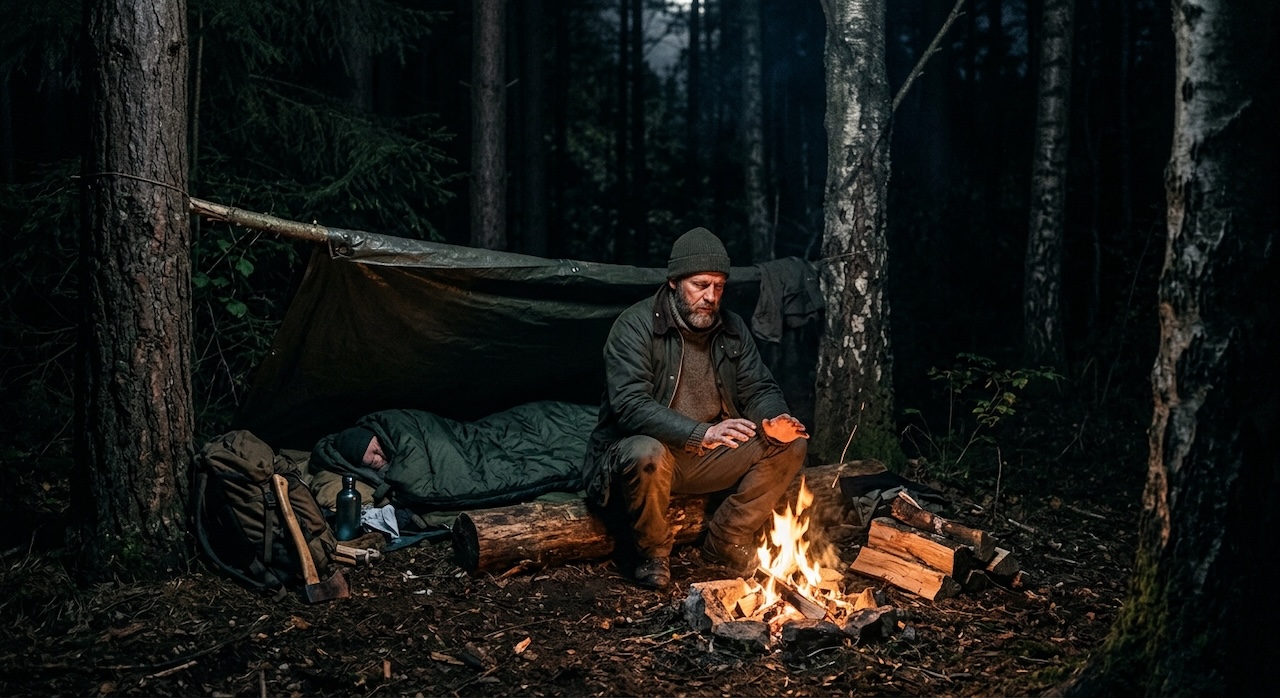

Fire is one of our most primal needs. Learn how to master the flame with this guide to starting the perfect fire.
There’s something primal about a well-built fire. It cuts through the darkness, warms the bones, and turns an ordinary evening into something memorable. Whether you’re gathered around a stone hearth on a cold winter night or coaxing flames to life beside a mountain stream, the ability to build a fire that catches quickly, burns cleanly, and lasts is one of those quiet skills that still separates the prepared man from the one who ends up frustrated and cold.
The secret isn’t fancy gear or endless kindling. It’s understanding the simple science of fire—heat, oxygen, and fuel—and applying it with patience and method. Get this right and your fire will start on the first match, hold steady through the night, and leave you looking like you were born knowing how.
The Foundation: Choose Your Spot and Prepare the Ground
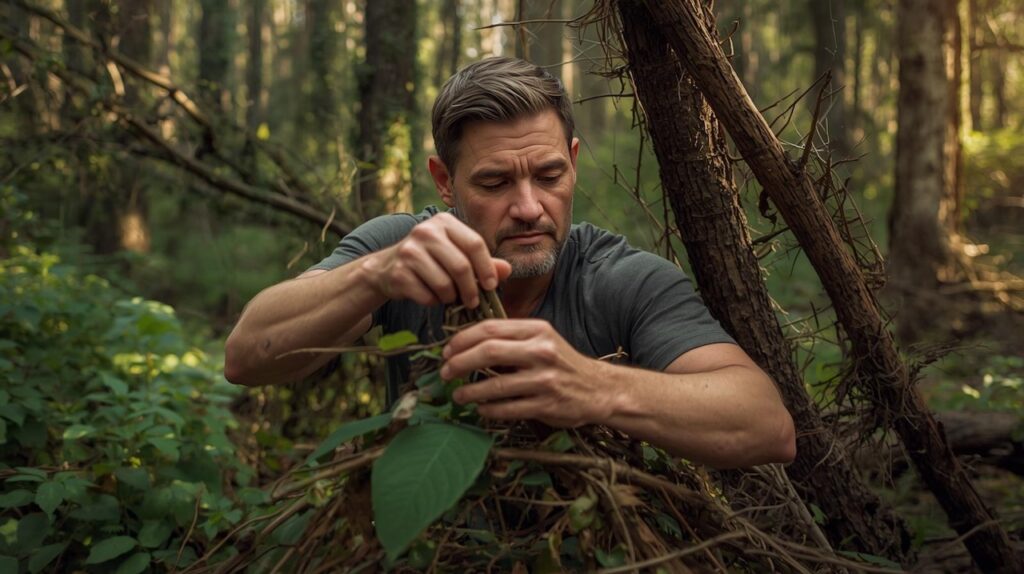
Indoors, a fireplace or wood stove demands respect for draft and clearance. Make sure the flue is open and the chimney has been swept recently. Outdoors, pick level ground away from overhanging branches, dry grass, or tents. Clear a circle at least three feet wide down to bare soil or rock. In wet conditions, build on a platform of green logs or flat stones to keep the base dry.
Gather your materials before striking a single match. Rushing this step is where most fires fail.
The Layers That Matter: Tinder, Kindling, and Fuel
Every strong fire starts small and grows deliberately.
Begin with tinder – not the hook up site but the fast-burning material that catches from the smallest spark. Dry birch bark, pine needles, shredded cedar, cotton balls soaked in petroleum jelly, or even dryer lint work beautifully. Have twice as much as you think you’ll need.
Next comes kindling – pencil-thick to finger-thick sticks that bridge the gap between tinder and real fuel. Snap them to uniform lengths so they stack neatly. The best kindling is dead, dry wood that snaps cleanly when broken.
Finally, the fuel logs – wrist-thick and larger. Hardwoods like oak, maple, or hickory burn hot and long. Softwoods like pine get things going quickly but burn faster and produce more smoke.
The Structure: Two Reliable Ways to Build
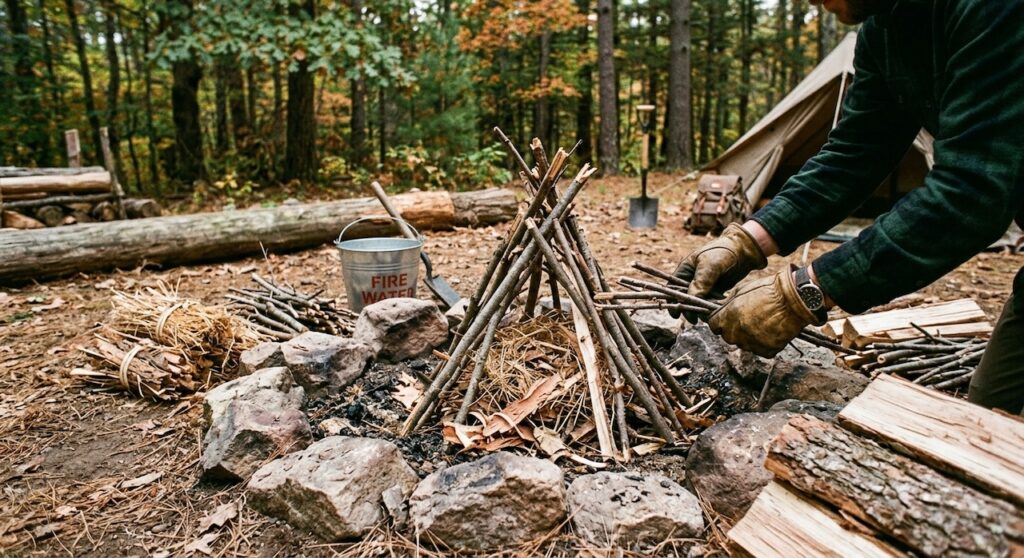
For most situations, the teepee method is unbeatable. Pile your tinder in a loose mound in the center. Lean kindling sticks against each other around it, forming a cone with plenty of gaps for air to flow. Leave an opening on the windward side for lighting. Once the kindling catches, gradually add larger sticks, then logs, always maintaining that open structure so oxygen can reach the flames.
When you need a longer, steadier burn—especially outdoors or in a fireplace—the log cabin or crisscross method shines. Lay two thick fuel logs parallel as a base. Stack smaller logs perpendicular across them, leaving space between each layer. Place your tinder and kindling in the center. This creates a self-feeding fire that collapses inward as it burns, maintaining heat without constant tending.
Starting It Right—Indoors or Out
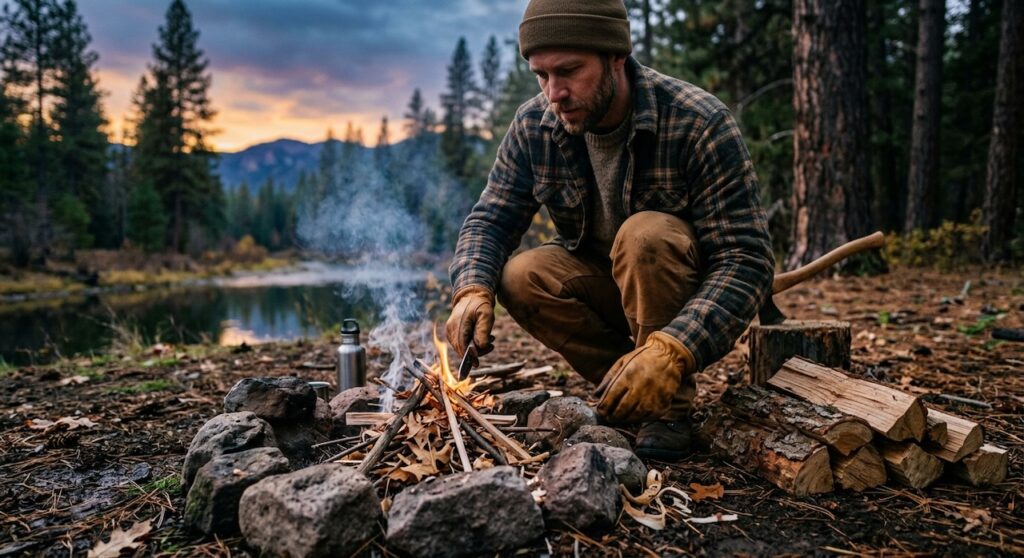
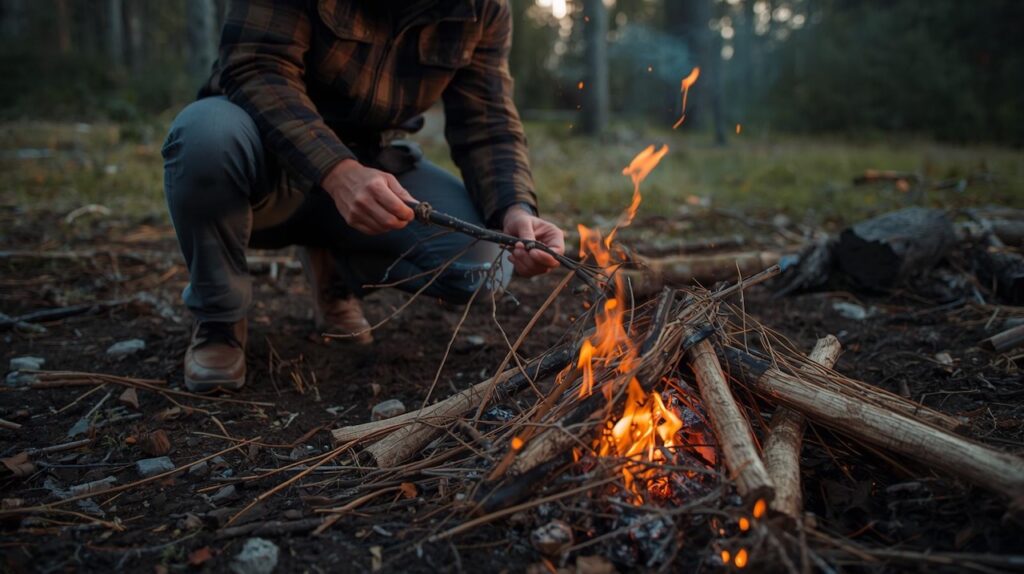
Light from the bottom, never the top. Hold the flame to the tinder until it flares, then gently blow or fan the base to encourage the flame upward. Once the kindling is crackling, add fuel gradually. Crowding the fire too early smothers it.
Outdoors, shield the flame from wind with your body or a natural windbreak during the first critical minute. Indoors, use a long fireplace match or lighter to reach deep into the structure without burning your fingers.
If conditions are damp, carve feather sticks—thin shavings left attached at one end—to increase surface area on your kindling. A ferro rod and striker beats wet matches every time; practice sparking into dry tinder until it becomes second nature.
Keeping It Going Through the Night
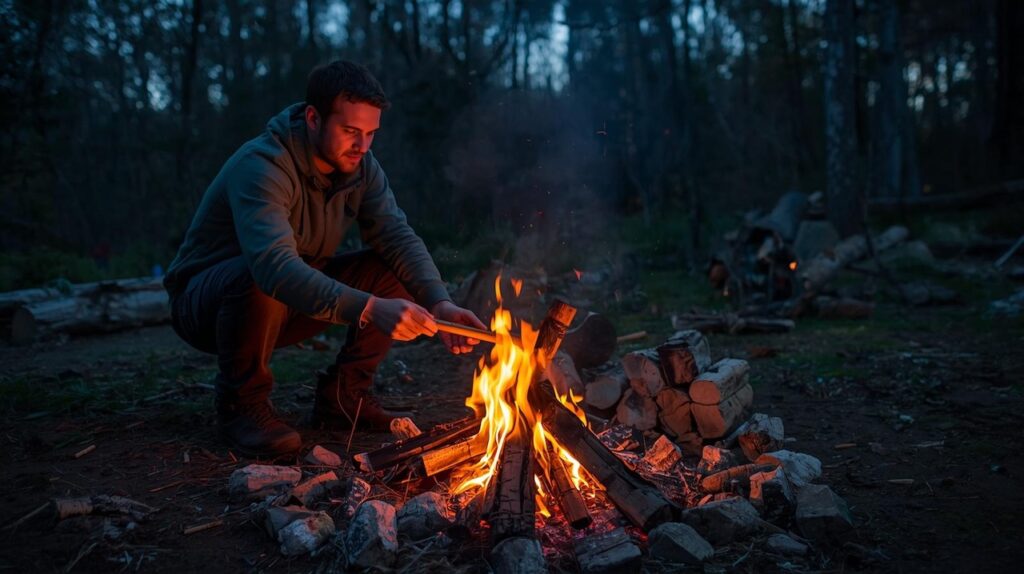
A perfect fire isn’t a bonfire. It’s controlled. Feed it steadily rather than letting it roar then die. Rotate logs as they burn down so fresh wood faces the heat. For an all-night fire outdoors, build a reflector wall behind it using green logs or rocks to bounce heat back toward your shelter.
Never leave a fire unattended. When it’s time to turn in or head out, drown it thoroughly with water, stir the ashes, and drown it again until everything is cold to the touch.
The Quiet Satisfaction of Mastery
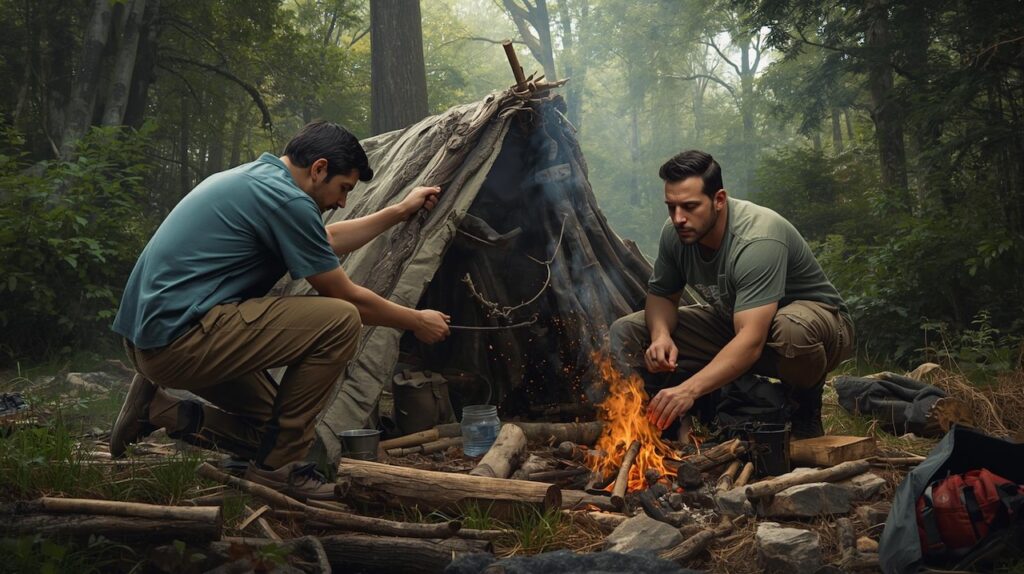
Building a good fire teaches patience and respect for natural forces. There’s a rhythm to it—gathering, stacking, coaxing, tending—that calms the mind even as it warms the body. Do it often enough and you’ll develop an instinct for what the wood needs and when.
Whether you’re hosting friends around a backyard pit, warming a remote campsite, or simply enjoying the glow of your living room hearth on a quiet evening, a fire built with care becomes more than heat. It becomes the center of the moment.
Next time the temperature drops or the power flickers, don’t reach for the lighter fluid or panic. Gather your materials, build your structure, and strike that first flame with confidence.
You’ll not only stay warm—you’ll carry yourself like a man who knows how to take command of his surroundings, one steady log at a time.