

Three traditions, three climates, three distinct philosophies of what whisky should be — understanding the differences between Scotch, Japanese, and Taiwanese whisky is not just an academic exercise. In Asia’s most dynamic whisky market, it is the foundation of drinking and collecting well.
Why This Comparison Matters Now
A decade ago, the question of which whisky to drink was, for at least most of us, essentially settled by geography and habit. Scotch was the serious option — old, prestigious, backed by centuries of craft and an almost intimidating institutional weight. It was what our fathers and grandfathers sipped (mine called his “patience juice”) and the selection just stuck. Japanese whisky quickly rose as the sophisticated regional alternative, understood by those in the know and slowly gathering the international reputation it deserved. Taiwanese whisky, to anyone outside a small circle of specialist collectors and the island’s own drinking culture, barely registered as a category.
That picture has changed with remarkable speed. Kavalan, the distillery that put Taiwan on the whisky map, has now accumulated more major international awards than distilleries ten times its age. Meanwhile, the Japanese whisky supply crisis — a consequence of demand outrunning decades of production — has pushed secondary market prices for sought-after expressions to levels that would have seemed fanciful fifteen years ago. And Scotch, the established benchmark against which everything else is measured, has itself diversified into a range of styles and a collector market of its own that rewards deep knowledge over casual familiarity.
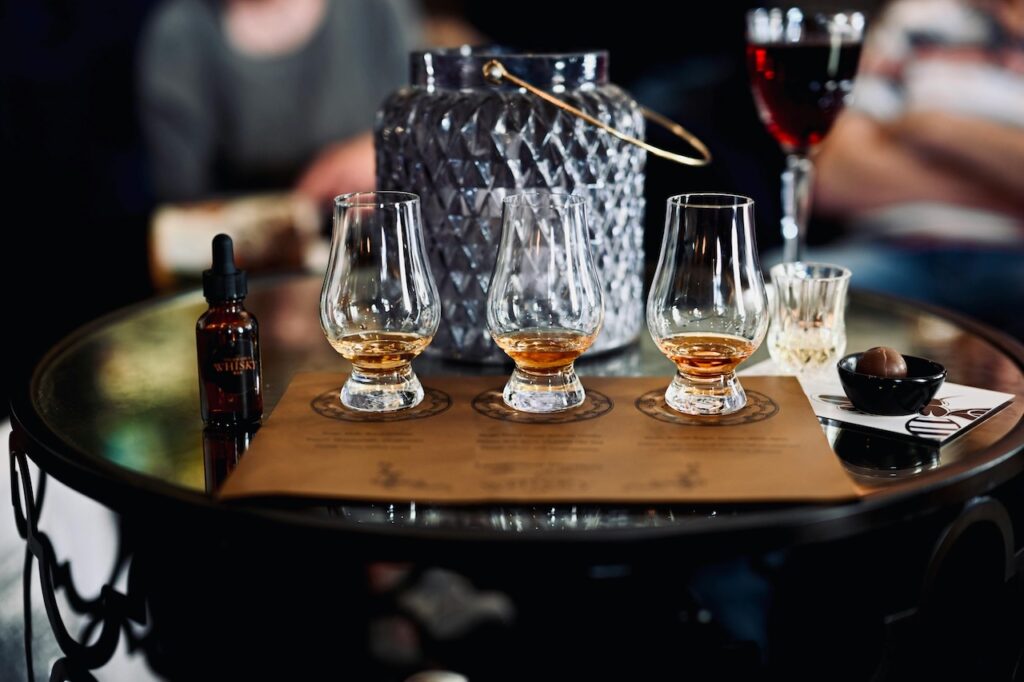
Here in Asia — where all three categories are accessible, where the drinking culture actively engages with whisky as a serious subject, and where the professional and social contexts that call for a well-chosen bottle arise regularly — understanding the differences between these three traditions is not merely interesting. It’s pretty bloody useful. The right whisky for a Chinese New Year gift is not the right whisky for a Japanese client dinner, which might not the right whisky for a solo evening of considered drinking, and which is almost certainly not the right whisky to bring to the kind of cocktail gathering where it will disappear into a highball before anyone has smelled the glass.
Knowing the terrain means making better decisions across all of these occasions.
Scotch Whisky: The Origin and the Standard
As you might have always suspected, there’s much more to Scottish whisky than meets the eye, from regional styles to blending and barrel expressions. Here’s what you need to consider.
The Foundation
Scotland’s claim to whisky primacy is not merely historical sentiment — it is the product of a specific combination of geography, water, climate, and five centuries of accumulated craft knowledge that cannot be relocated or replicated in its entirety. The country’s water, filtered through granite and peat over millennia, is among the most mineral-complex in the world and contributes directly to the flavour of the spirit made with it.
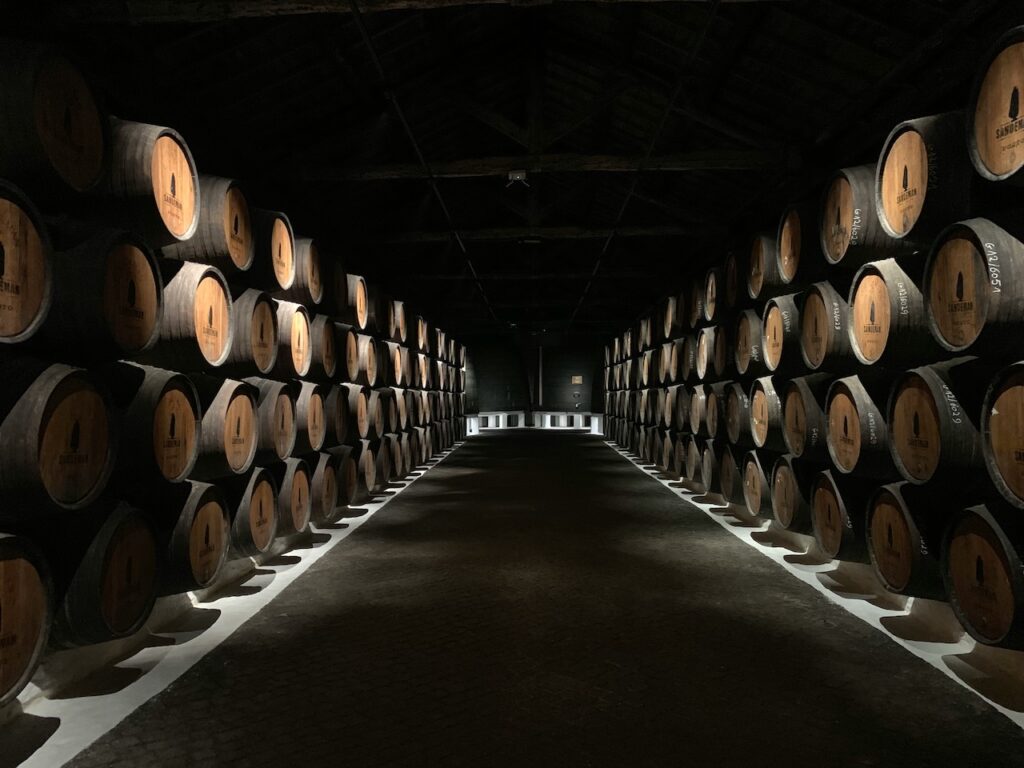
In fact, it’s the petulant Atlantic weather systems that drive relentless rain and persistent cool temperatures across most of the country that create that perfect maturation environment — damp, cool, slow — that produces whisky of extraordinary subtlety and longevity. And the Scottish distilling tradition, formalised through the Excise Act of 1823 that brought illicit distillers into a legal framework, has had two centuries to develop the institutional knowledge and material infrastructure — the cooperages, the malting floors, the distinctive still shapes — that still define the category’s character.
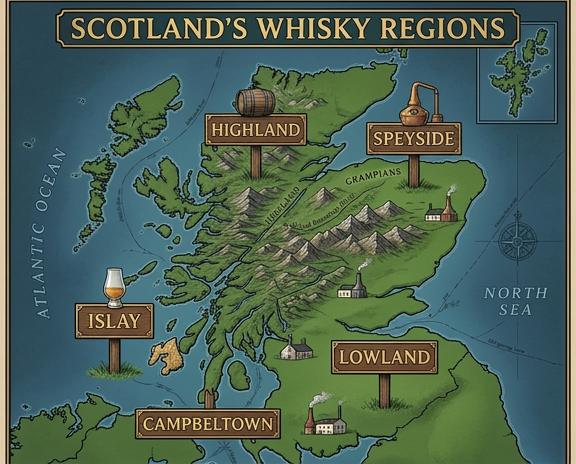
Scotch whisky is legally defined as whisky distilled and matured in Scotland for a minimum of three years in oak casks, produced from either malted barley (for single malt Scotch) or a mixture of grains (for grain Scotch and blended Scotch). The category is divided into five major producing regions, each of which has developed a characteristic style that reflects both the local environment and the historical accidents of economic geography.
The Scottish Regions
Speyside is the most productive region in Scotland by volume and, for many enthusiasts, the most reliably satisfying in terms of consistent quality. The River Spey and its tributaries run through a sheltered valley in the northeast that concentrates more distilleries per square mile than anywhere else in the whisky world. The Speyside style is generally defined by fruit — dried apricot, ripe pear, apple, occasionally tropical notes — combined with the sweetness of predominantly ex-bourbon maturation and a characteristic floral delicacy.
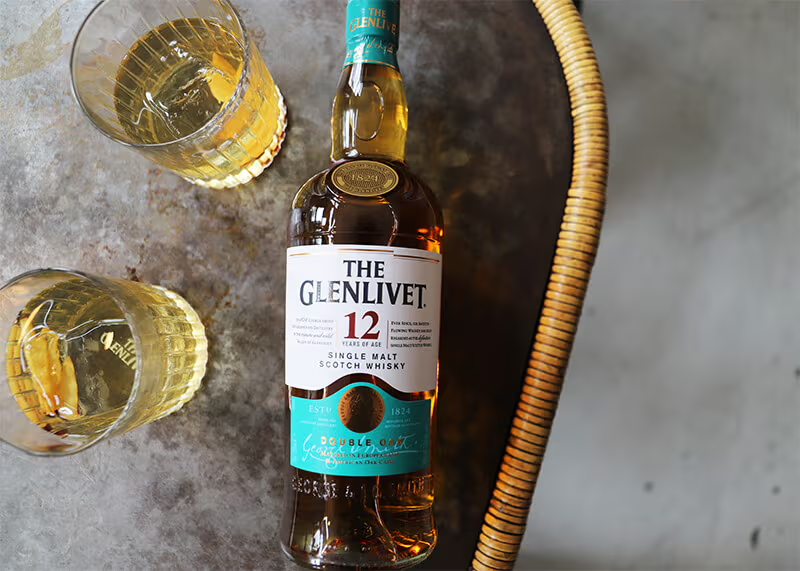
Glenfiddich and The Glenlivet, the world’s two best-selling single malts, are both Speyside distilleries, and for good commercial reason: the style is approachable, complex enough to reward attention, and friendly enough to convert newcomers. Glenfarclas, Aberlour, Macallan, and Craigellachie represent the fuller, more sherry-influenced end of the Speyside range; Glen Grant and Cragganmore the lighter, more delicate style.
The Highlands, Scotland’s largest whisky-producing region by geographic area, resist easy generalisation in a way that reflects the sheer diversity of distillery locations across a vast and varied landscape. Glenmorangie, on the northern coast near Tain, produces a style defined by floral lightness and the character of its extraordinarily tall stills — the tallest in Scotland, which produce a spirit of exceptional delicacy that captures the region’s maritime character.

Dalmore, further along the same coast, is defined by sherry cask maturation of unusual intensity, producing expressions of rich, Christmas-cake depth. Oban (one of my favourites), on the west coast, sits at the threshold of the Islands style with a maritime salinity and a gentle smoke that reflects its geography. Tomatin and Blair Athol in the southern Highlands produce different styles again — fuller, more grain-forward — while Glengoyne, which dries its malt entirely without peat smoke, represents the Highlands tradition at its most explicitly approachable.
Islay — the island off Scotland’s west coast that has become, for many enthusiasts, the most romantically charged address in the whisky world — is defined by peat. The island’s bogs have been laid down over thousands of years, and the tradition of drying malted barley over burning peat has produced a range of distilleries whose whiskies share a common backbone of phenolic smoke even as their individual characters diverge considerably.
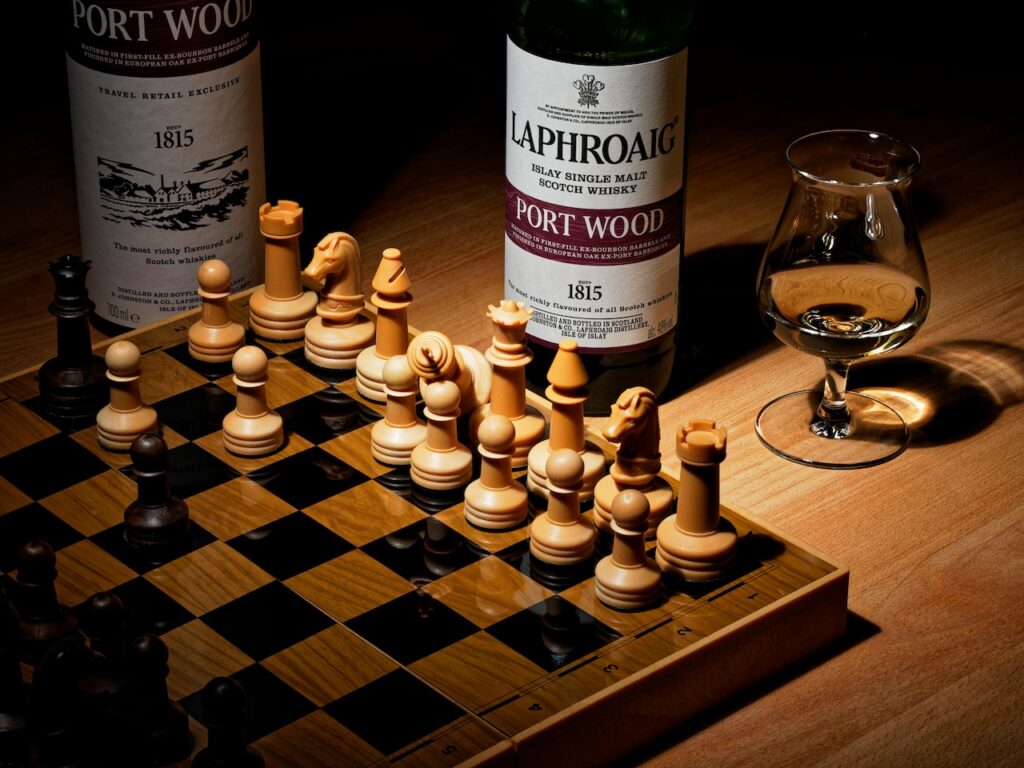
Ardbeg and Laphroaig (another firm favourite) represent the most assertively smoky expression of the Islay style: medicinal, maritime, intensely peaty, with an iodine and tar quality that is utterly distinctive and deeply divisive — loved with passionate loyalty by those who respond to it, found simply undrinkable by those who don’t. Bowmore and Bunnahabhain (try saying that three times fast) occupy a more moderate position, where the peat smoke is present but balanced against fruit and maritime salt. Bruichladdich, which operates both peated (Port Charlotte) and unpeated (The Classic Laddie) expressions, demonstrates that Islay’s character extends beyond smoke to include a mineral, almost chalky quality in its unpeated expressions that is uniquely its own.
The Lowlands, south of an imaginary line running roughly from the Clyde to the Tay, produce lighter, typically unpeated whiskies that were historically associated with triple distillation and a consequently delicate, almost gin-like character. Most of the Lowland distilleries that flourished in the nineteenth century have closed; the contemporary Lowlands is defined primarily by Auchentoshan (a lesser known beauty), whose triple-distilled whiskies are genuinely elegant and frequently undervalued, and the newer generation of craft producers including Ailsa Bay and Kingsbarns.

Campbeltown, once Scotland’s whisky capital with over thirty distilleries, now has three — Springbank, Glen Scotia, and Glengyle (home to Kilkarren) — but its reduced size belies its significance. Springbank is arguably the most cult-status distillery in Scotland among serious collectors: it malts its own barley, triple distils to varying degrees depending on the expression, and produces three entirely distinct styles (Springbank, Longrow, and Hazelburn) from the same still set. Its bottlings routinely command secondary market premiums and allocation queues.
Blended Scotch: The Other Half of the Story
Single malt Scotch receives most of the critical attention and the collector investment, but blended Scotch — which accounts for roughly ninety percent of all Scotch whisky sold worldwide — deserves more serious engagement than the drinks cognoscenti typically afford it. The great blended Scotches — Johnnie Walker Blue Label, Chivas Regal 25, Compass Box Great King Street — are exercises in blending artistry that require the management of dozens of component whiskies into a coherent whole, a skill that is distinctly different from, and in some ways more complex than, the distillery-focused craft of single malt production.
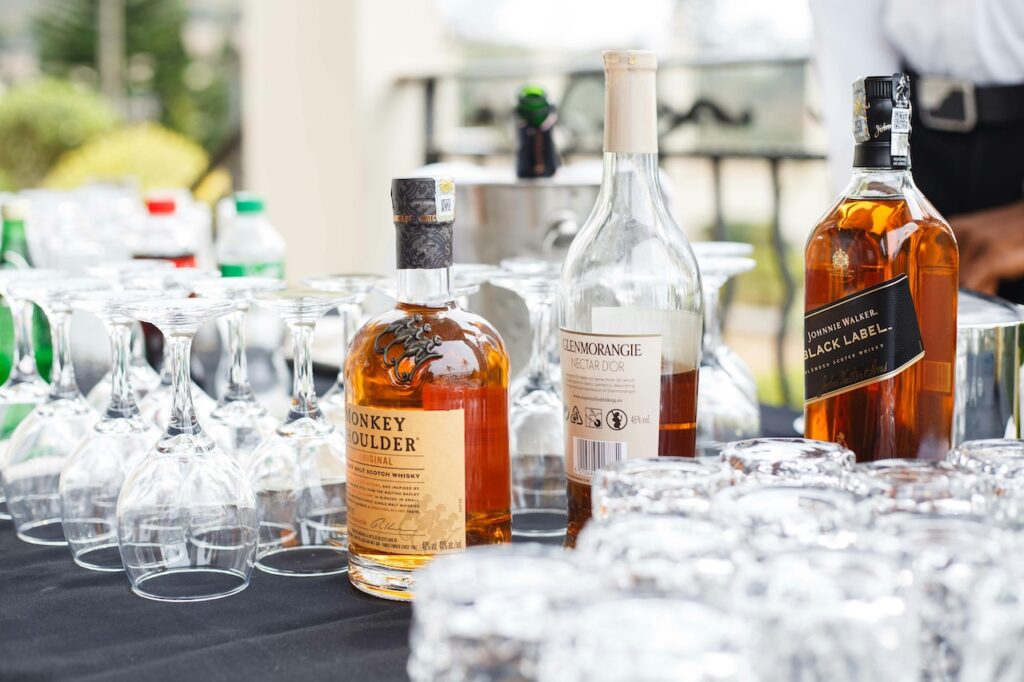
For the Asia-based gents, blended Scotch occupies a specific practical niche. In Chinese business gift-giving culture, a bottle of Johnnie Walker Blue or a premium Chivas expression carries a recognisable prestige that translates across cultural and linguistic boundaries — the brand equity is embedded in the market in a way that a boutique single malt, however objectively superior, cannot reliably claim.
Understanding this distinction — when prestige signalling matters more than personal preference, and when the reverse applies — is part of the practical whisky intelligence that this comparison is designed to build.
Japanese Whisky: Refinement as a Philosophy
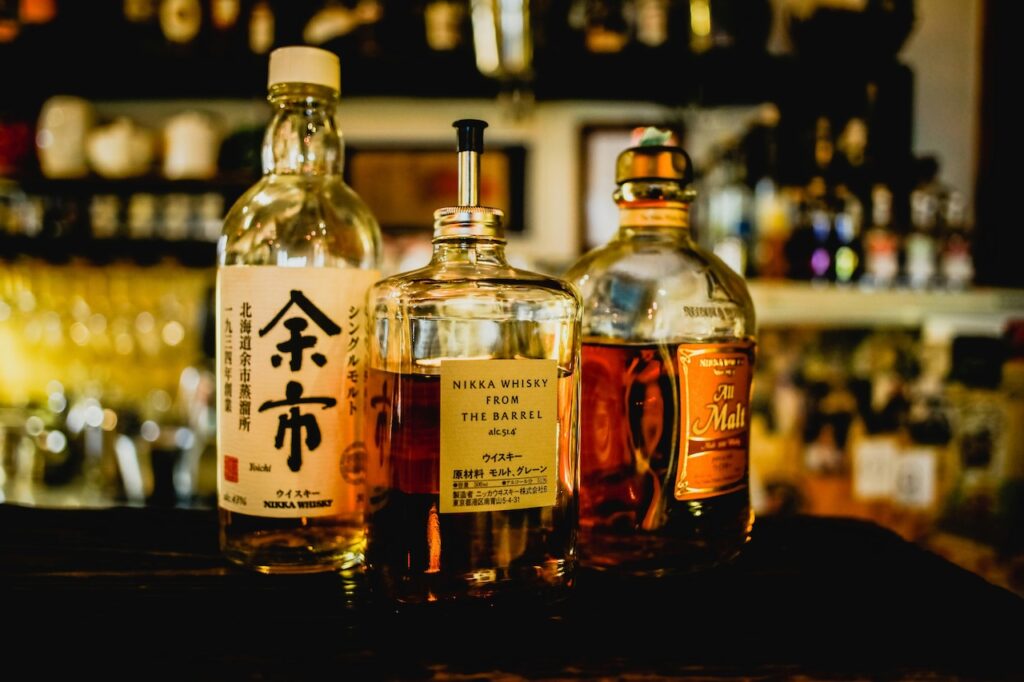
We have talked about the rise of Japanese whisky before. What is worth revisiting here is not the history but the comparative perspective: what specifically makes Japanese whisky different from Scotch, beyond the geographic origin?
The answer is not simply that Japan has adapted the Scottish model — it is that Japan has applied to the Scottish model a set of cultural values that have produced a genuinely distinct aesthetic. Scottish whisky is, at its finest, a product of time and terroir: the accumulated character of decades in a specific cask in a specific warehouse in a specific Scottish climate. Japanese whisky is, at its finest, a product of intentionality: the result of extraordinary precision in still selection, cask choice, blending philosophy, and presentation. The Japanese distiller treats the whisky as a craftsman treats a material — something to be understood and shaped with deliberate skill rather than simply allowed to become what the environment will make it.
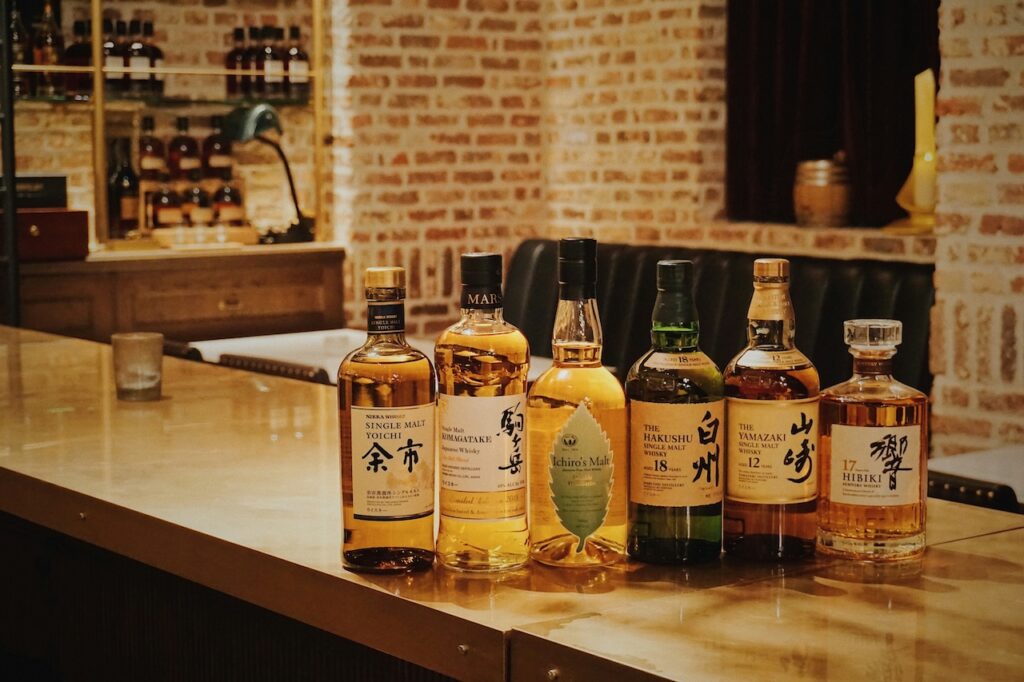
This produces, in practical terms, a style that tends toward elegance, balance, and complexity without roughness. The edges are rounded where Scottish whiskies often have edges worth keeping. The integration of wood, fruit, grain, and spirit is more complete in most Japanese expressions than in comparable Scotch, because the Japanese blending tradition — developed to serve a domestic market that historically preferred harmony over assertion — has optimised for precisely that quality. The famously described “delicate” character of Japanese whisky is not a weakness. It is the aesthetic outcome of a specific philosophy pursued with exceptional technical competence.
The mizunara oak dimension gives Japanese whisky its most distinctive regional character — the sandalwood, incense, and coconut notes that only this wood imparts, and only after very long maturation periods. It is the element that is most clearly and irreducibly Japanese in the whisky, the flavour that cannot be transplanted because the trees grow in Hokkaido and the maturation requires Japan’s specific climate to develop at the required pace.
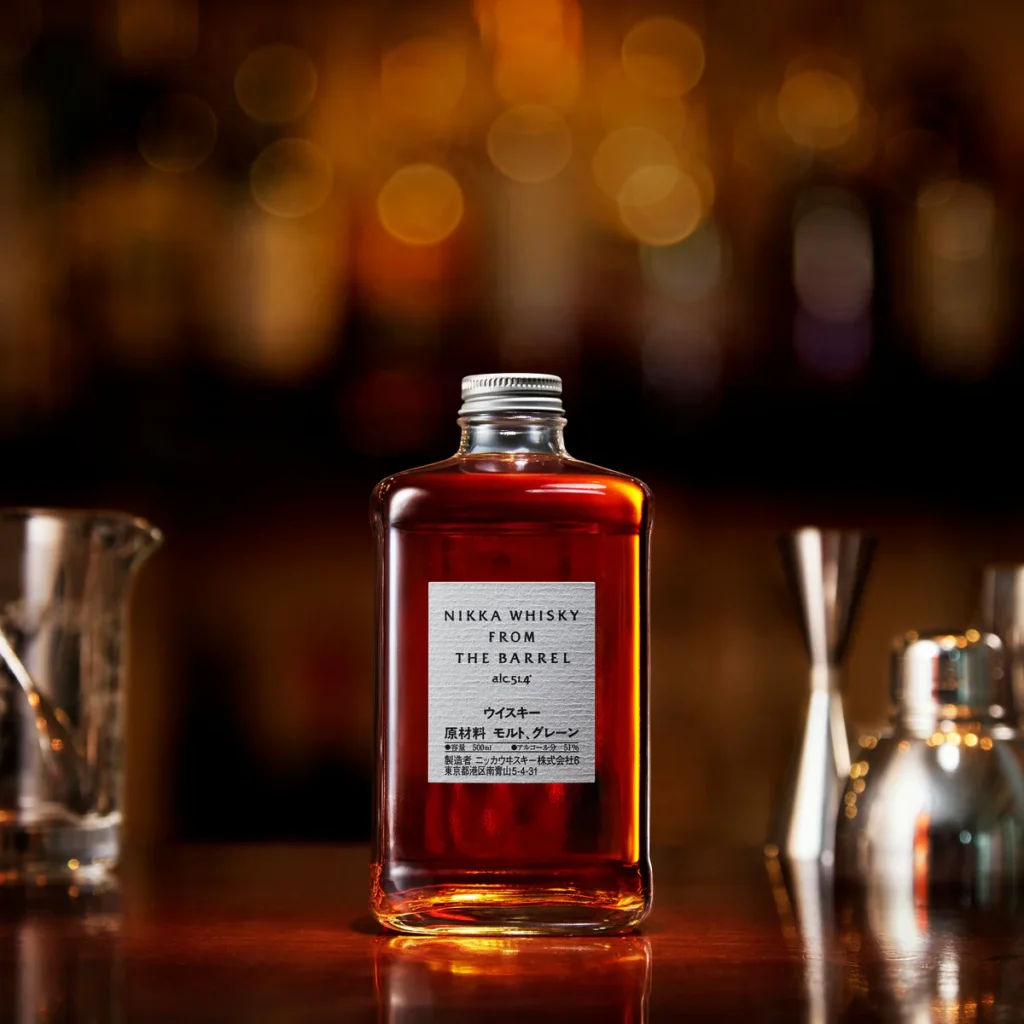
Against the backdrop of the supply crisis is currently facing, Japanese whisky’s position in the comparative landscape has also shifted economically. The accessible entry points — expressions that deliver genuine quality without requiring secondary market prices — are fewer than they were a decade ago, and the collector premium attached to allocated and aged expressions has removed some of the price advantage over comparable Scotch that Japanese whisky once carried. The practical recommendation is to focus on the value tier — Nikka From the Barrel, Suntory Toki, Hakushu Distiller’s Reserve — for regular drinking, and to reserve significant expenditure for specific age-statement expressions where the quality justifies the premium.
Taiwanese Whisky: Climate as Competitive Advantage
The Kavalan Story
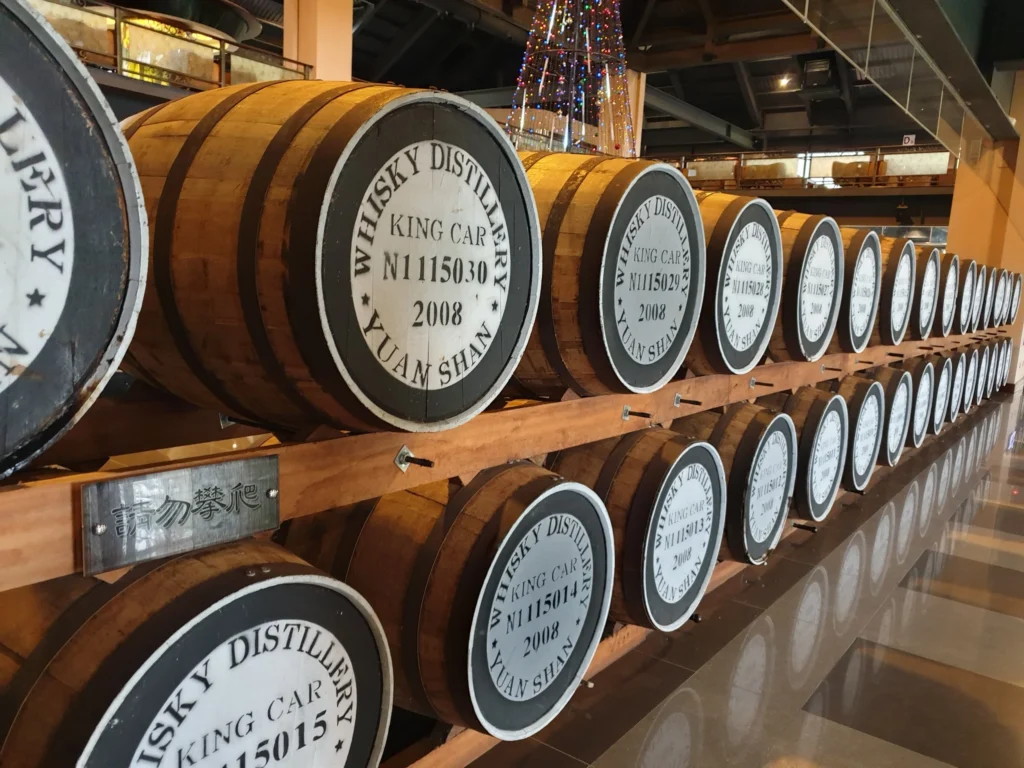
In 2006, the King Car Group — a Taiwanese food and beverage conglomerate based in Yilan County on Taiwan’s northeastern coast — opened a whisky distillery in a country with no whisky tradition whatsoever. The decision was commercial and ambitious: the global market for single malt whisky was growing, the barriers to entry were primarily capital and knowledge rather than geographic exclusivity, and Taiwan’s rapidly maturing premium spirits market represented an obvious domestic opportunity.
What happened next was not entirely anticipated. In 2010, a Kavalan expression entered the World Whiskies Awards in Edinburgh. The judging panel was blind, meaning the tasters had no knowledge of origin. The Kavalan finished in the top results in its category, ahead of established Scottish distilleries with decades more experience and centuries more institutional weight. The result was reported with a mixture of astonishment, scepticism, and, from a few corners, something approaching outrage. It was, however, correct. The whisky in the glass was excellent, and the subsequent decade of awards and critical recognition has confirmed rather than inflated that initial assessment.
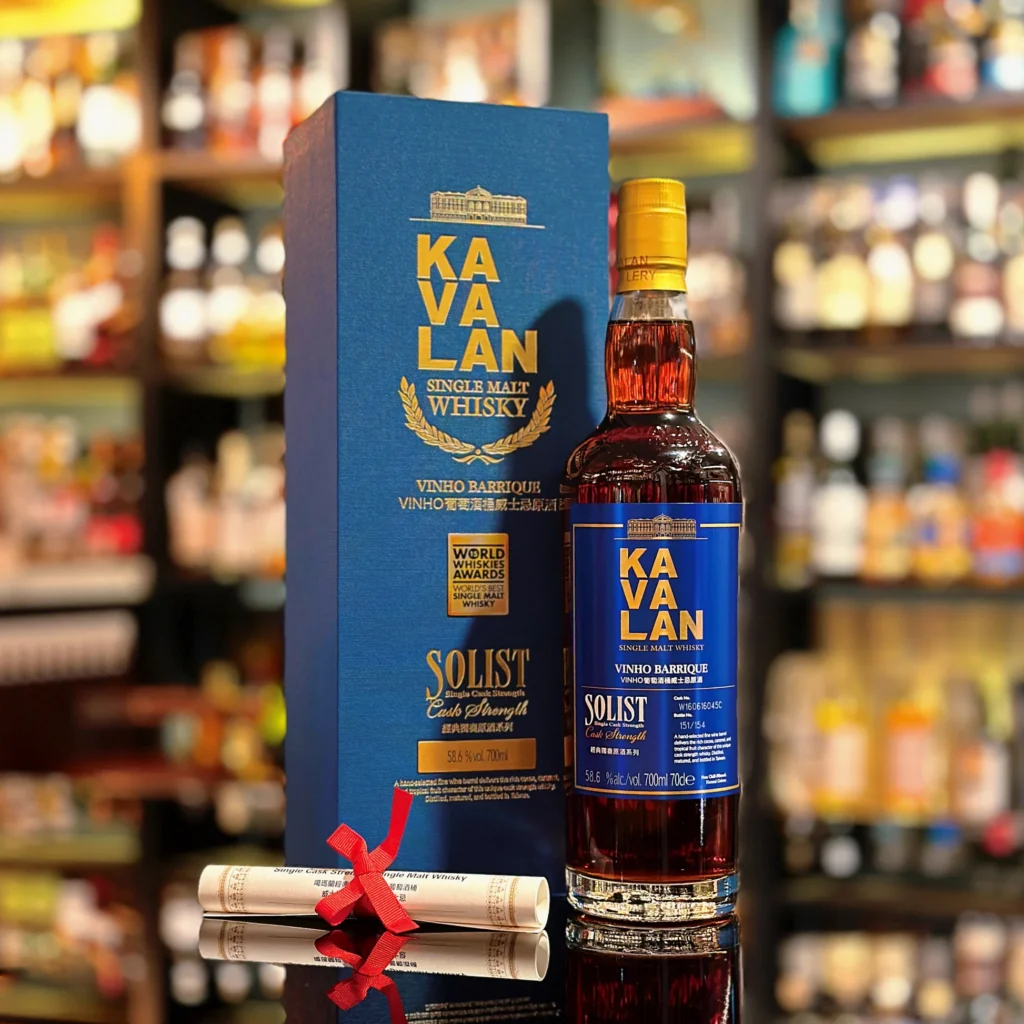
Kavalan now produces a range of expressions that collectively represent the most awarded whisky portfolio from outside Scotland, Ireland, and America in the history of the category. The Solist series — single cask bottlings at natural cask strength from various wood types including ex-sherry, ex-bourbon, vinho (Port-style wine), and brandy casks — has accumulated a number of gold medals and “world’s best” designations at major international competitions that would be remarkable for any distillery and is genuinely extraordinary for one that opened its doors in 2006.
How Taiwan’s Climate Rewrites the Rules of Maturation
The key to understanding Taiwanese whisky is understanding what happens to spirit in a cask in a subtropical climate as opposed to a cool maritime one. In Scotland, the ambient temperature ranges from roughly minus ten degrees in winter to perhaps twenty-five degrees in an exceptional summer, and the humidity is consistently high. This creates a slow, steady maturation process: the spirit expands and contracts with seasonal temperature change, pushing in and out of the oak’s surface layers and gradually extracting colour, flavour compounds, and the vanilla and caramel character of charred American oak or the dried fruit complexity of sherry butts.
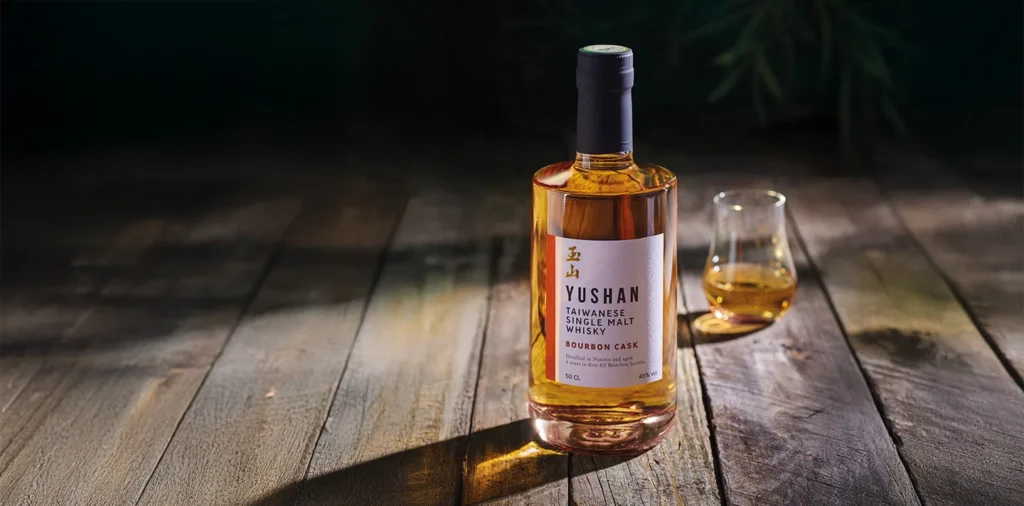
The angel’s share — the portion of liquid lost to evaporation through the cask walls each year — typically runs at around two percent annually. That means a Scotch whisky aged for twelve years has lost approximately twenty-three percent of its original volume to the angels (those lushes!).
In Taiwan’s Yilan County, the average annual temperature is roughly twenty-three degrees Celsius with periods of considerably higher heat, and the humidity sits at around eighty percent through much of the year. The physical effects on the cask are dramatic: the spirit expands and contracts more rapidly and more dramatically with the wider temperature swings, extracting wood character at an accelerated rate. The angel’s share runs at between ten and fifteen percent per year — meaning a cask that sits in a Taiwanese warehouse for six years may have lost as much as fifty to sixty percent of its original volume. The spirit that remains has extracted an extraordinary amount from the wood in a very short time.
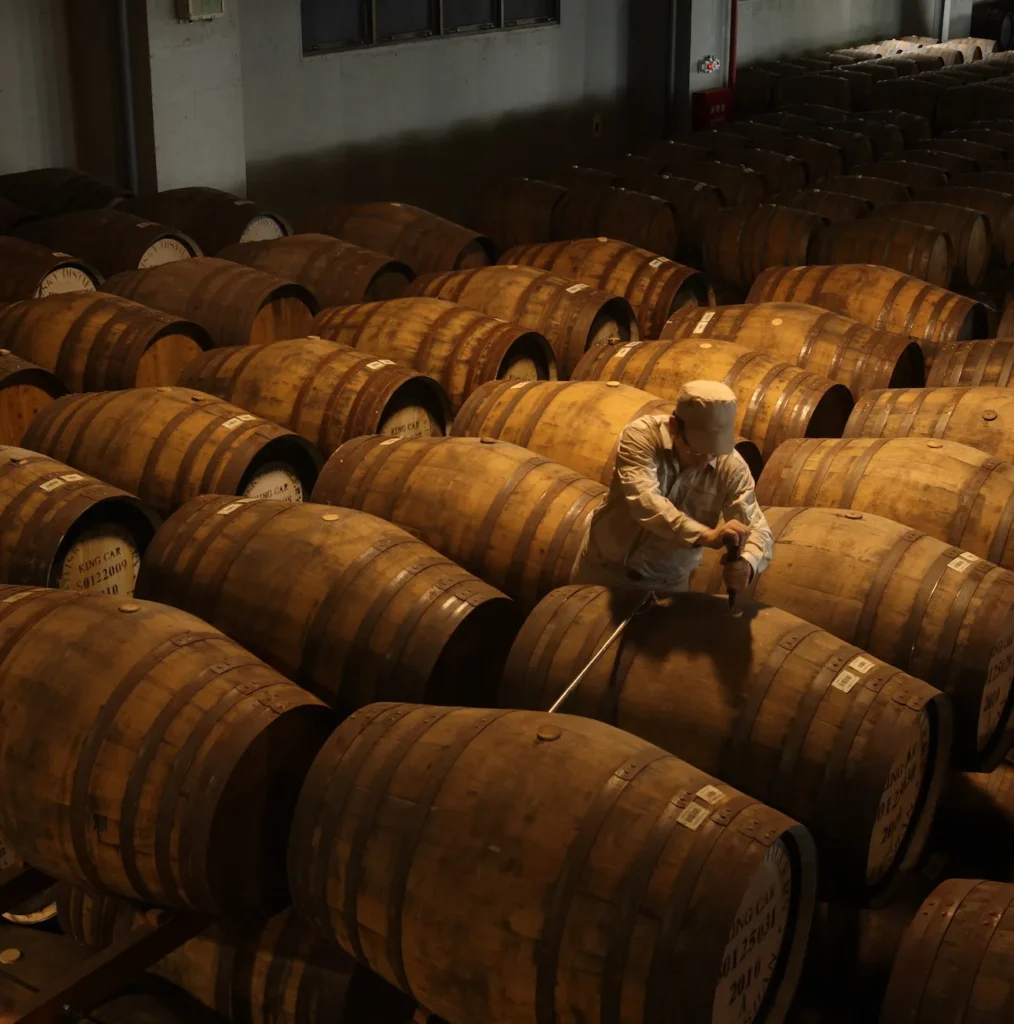
This creates Taiwanese whisky’s defining characteristic: a maturity and wood integration that would take twice or three times as long to achieve in Scotland. A Kavalan six-year-old can present with the wood influence and flavour complexity of a twelve or fifteen-year-old Scotch. The rapid maturation is not artificial acceleration — the chemistry is identical to what occurs in Scotland, merely running faster — and the resulting whisky has a richness, tropical fruit intensity, and wood integration that is genuinely distinctive rather than simply a younger version of something familiar.
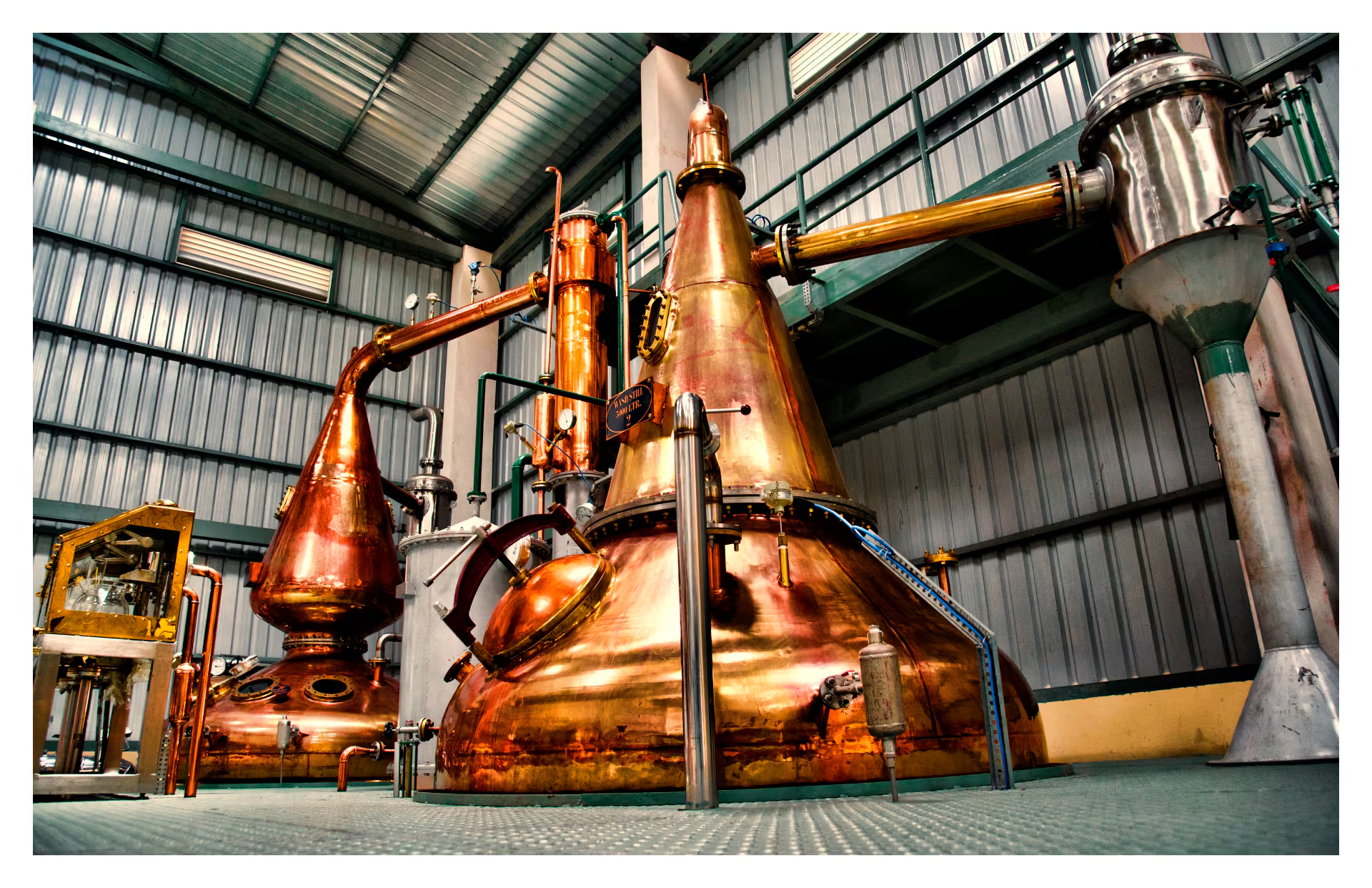
The flavour profile that emerges from this process leans toward the tropical: ripe mango, papaya, banana, pineapple, coconut — fruit notes that are present in Scotch malt whisky but rarely with quite this immediacy and generosity. Layered beneath the fruit are the expected vanilla and caramel of ex-bourbon maturation or the dried fruit and nut complexity of ex-sherry, and the spirit character — distilled from Scottish-sourced malted barley on pot stills that the King Car Group acquired partly from Scotland — is clean, medium-bodied, and well-suited to showing off the cask’s contribution.
The Omar and the Broader Taiwanese Landscape
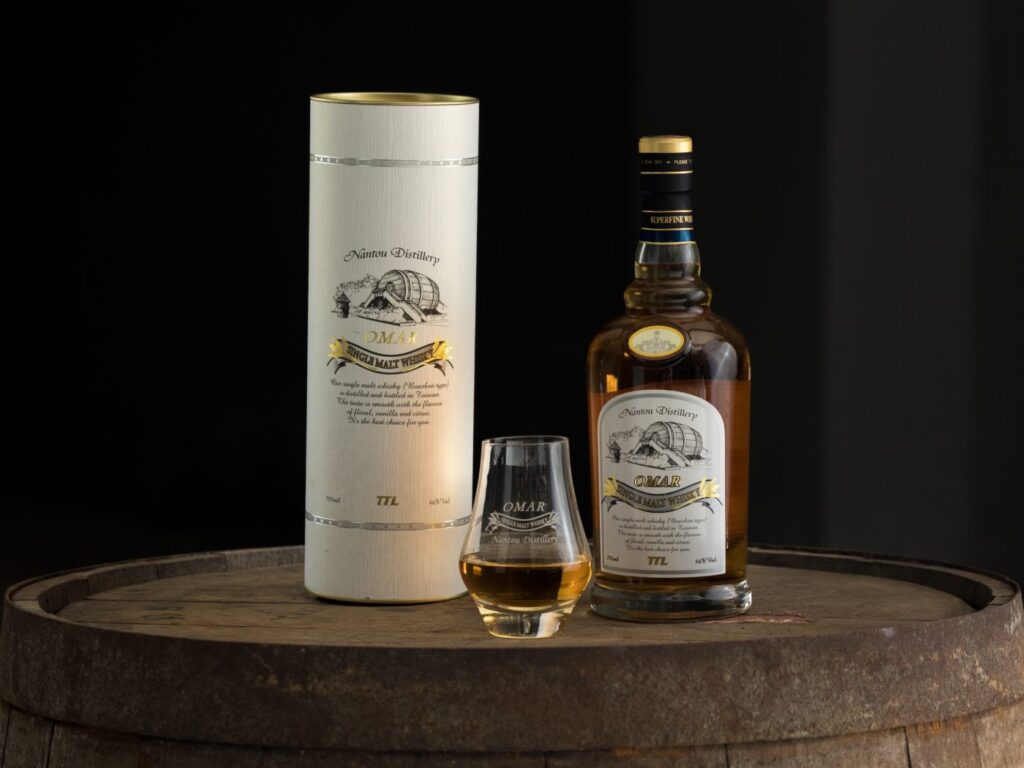
While Kavalan is the category-defining producer, Taiwan has a second whisky distillery that’s worth paying attention to (especially if you’re a budding collector): Omar, produced in Nantou, in the island’s central highlands. The production environment at Nantou’s elevation — cooler than Yilan’s coastal climate — produces a whisky with a slightly more restrained character than Kavalan’s exuberance, while still benefiting from Taiwan’s generally accelerated maturation cycle. The Omar range, including single malt expressions in bourbon and sherry cask variants, represents a more accessible price point and a distinct style that is worth exploring once Kavalan’s character is established as a reference point.
The Direct Comparison: Style, Character, and Occasion
As you delve into your whisky journey you’ll quickly appriciate the subtle distinctions between whisky styles and origins. Here’s what you should be looking out for.
On Peat and Smoke
This is the dimension where Scotch has the most obvious advantage simply through the breadth of its range. The phenolic, smoky character of Islay and some Island and Highland Scotches — from the intense medicinal peat of Laphroaig and Ardbeg through the more balanced smoke of Bowmore and the subtler whisper of a lightly peated Highland — occupies a flavour space that Japanese and Taiwanese distilleries have approached but not replicated.
Japanese distilleries have produced peated expressions — Hakushu Heavily Peated, Yoichi’s native peated character, Akkeshi’s deliberate Islay-influenced production philosophy — but the peat used is typically Scottish peat, and the character it produces tends toward a more integrated, less assertive smoke than the full Islay experience. Taiwanese whiskies are generally unpeated, focusing the flavour narrative on cask influence and spirit character rather than phenolic complexity. If peat and smoke are your primary whisky interest, Scotland remains the undisputed address.

On Elegance and Integration
Japanese whisky, at its best, is the most harmoniously integrated of the three traditions — the one where the various flavour components (wood, fruit, spirit, malt) are most thoroughly woven together into a single coherent experience rather than presenting as distinct layers to be analytically separated. This is the product of a blending philosophy and a distillery culture that has optimised over decades for balance and subtlety. For the drinker who values restraint, complexity, and a style that rewards contemplative attention over several sips rather than immediate impact, Japan is the natural conclusion.
Scotch single malts, by contrast, often preserve a more individual character that reflects specific decisions at the distillery level — the still shape, the cask selection, the maturation warehouse conditions — rather than a blended house style. This produces a greater range of expression within the category, from the austere elegance of a Springbank to the almost overwhelming richness of a full-sherry Macallan, and a connoisseur culture that engages deeply with those distinctions.
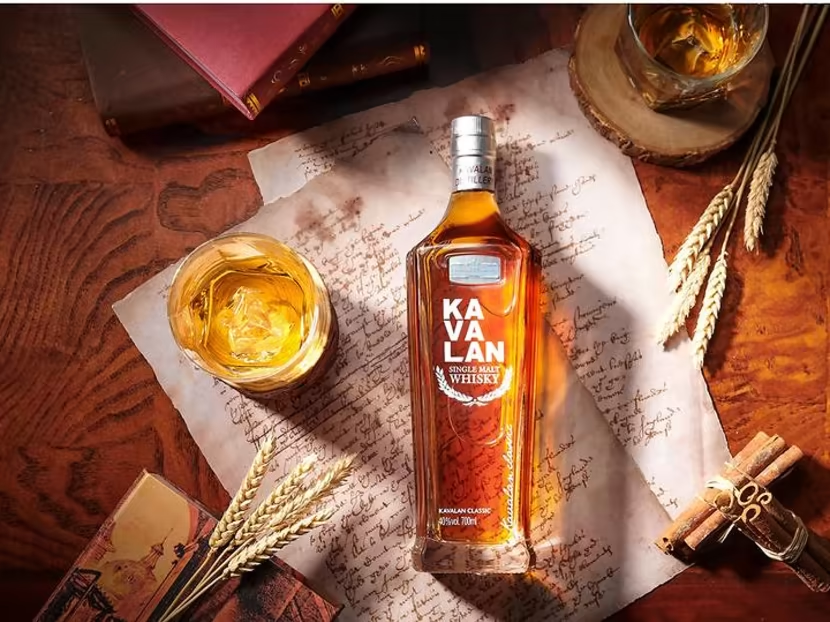
Taiwanese whisky’s strength is immediacy of pleasure (and who doesnt love that?): the tropical fruit generosity and rich wood character that result from the climate’s accelerated maturation create a whisky that is engaging and satisfying on the first sip in a way that some more subtle Scotches require time and context to reveal. This is not a criticism. Whisky that delivers obvious pleasure is serving a legitimate purpose, and Kavalan’s international success rests substantially on the fact that it rewards the non-specialist drinker as generously as it rewards the expert.
On Value and Investment
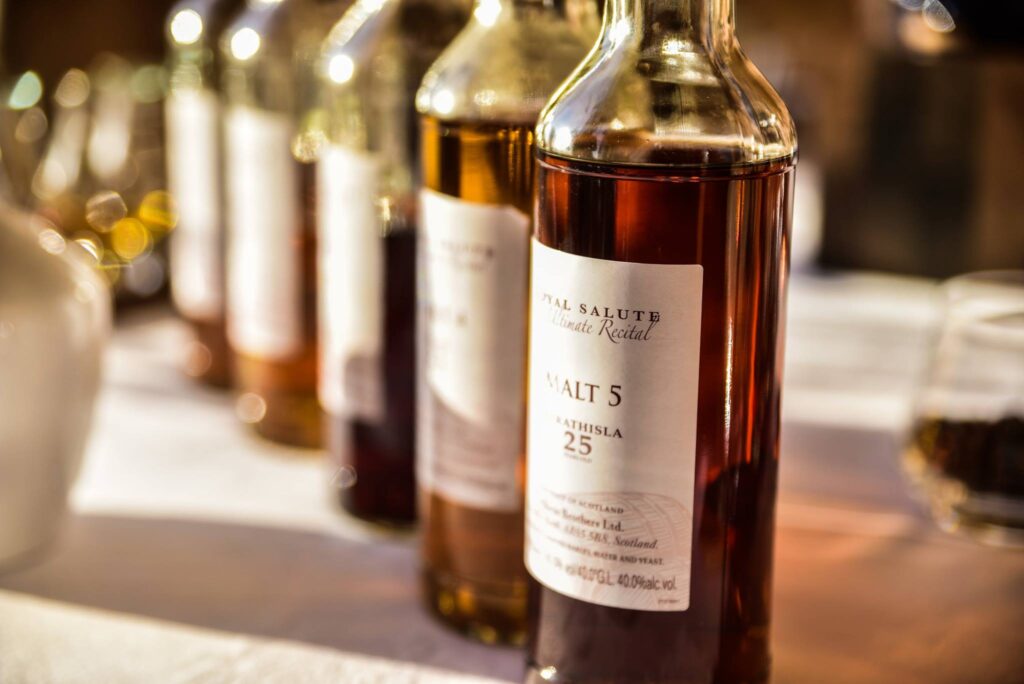
The value equation across the three traditions has shifted considerably over the past decade and continues to evolve. At the entry level — expressions priced for regular, unoccasioned drinking rather than special gift or investment purchase — Scotch offers the deepest and most varied range: from honest blended Scotches in the twenty to forty dollar range through solid entry-level single malts (Glenlivet Founder’s Reserve, Glenfiddich 12, Monkey Shoulder) in the US$40 to US$80 dollar tier.
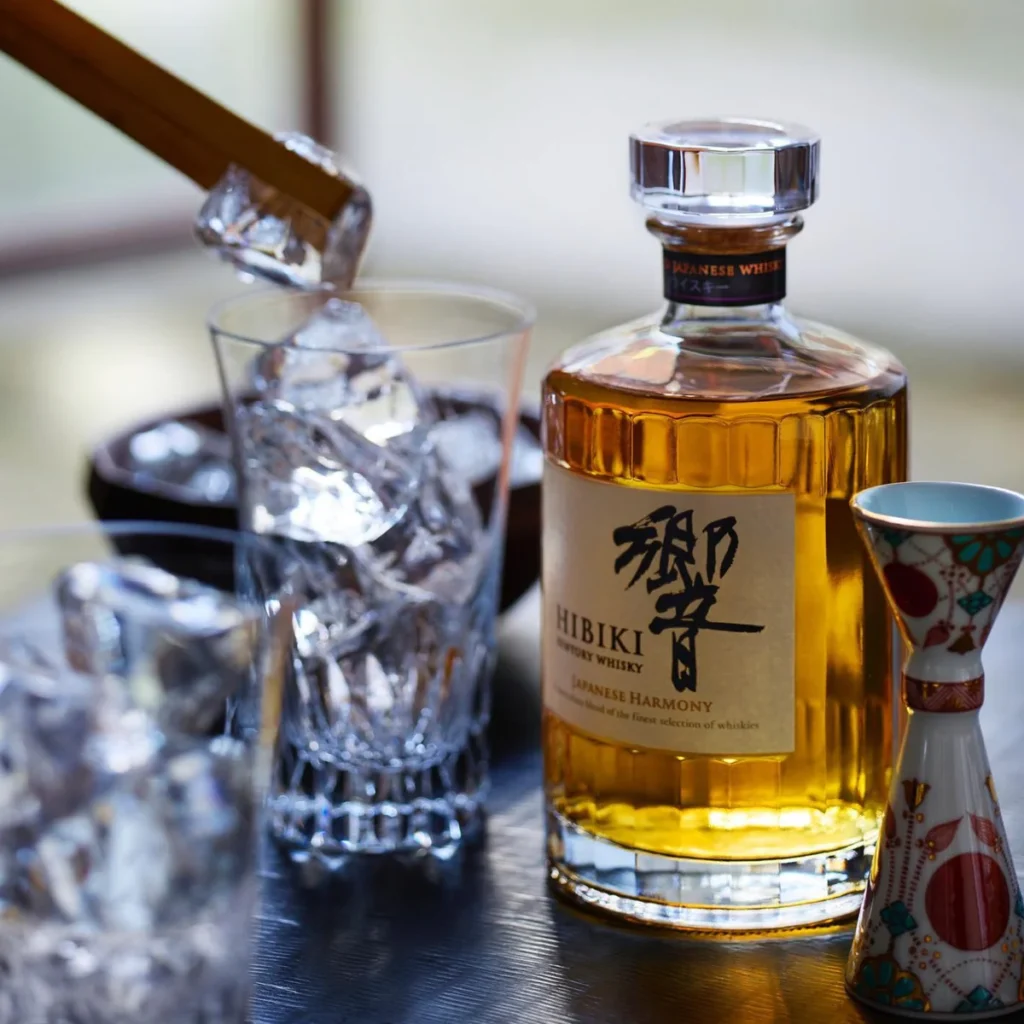
Japanese whisky at the entry level is represented primarily by the no-age-statement expressions — Suntory Toki, Nikka Days, the Coffey series — which deliver quality but relatively limited choice. Taiwanese whisky enters the serious conversation from around US$60-80 for the Kavalan Classic and Conductor expressions, with the Solist series commanding prices in the US$100-200 range.
For the collector investing in bottles as alternative assets, the dynamics are more nuanced. Scotch from independent bottlers and distillery exclusives — particularly from Springbank, Brora, Port Ellen, and the closed distilleries whose remaining stocks are finite — has established long-term appreciation records that provide the most defensible investment case. Japanese whisky in the allocated and age-statement tier (Yamazaki 18, 25; Hibiki 21; Nikka single casks) has seen dramatic price appreciation but operates in a market with genuine liquidity risk given the complexity of the secondary market and problems with counterfeiting.
Taiwanese whisky, and Kavalan in particular, remains underpriced relative to its quality by the standards of the international collector market — not because the quality is doubted, but because the category is young and the collector infrastructure is still developing. For the buyer with a five to ten year horizon and a conviction in the quality, this represents the most interesting asymmetric opportunity in the current whisky market.
The Asian Whisky Landscape Beyond These Three
The comparison of Scotch, Japanese, and Taiwanese whisky represents the three most developed and documented traditions available to whisky sippers, but the category of Asian whisky is itself expanding in ways that are worth monitoring.
India has been producing single malt whisky of genuine quality since Amrut Distilleries released its first expressions to the international market in 2004. Amrut’s climate — Bangalore sits at nearly a kilometre of altitude, with temperatures that drive fast maturation similar to Taiwan’s — produces whiskies of unusual power and spice, and the Amrut Fusion and Peated expressions have accumulated serious critical recognition. Paul John, from Goa, represents a second Indian voice with a distinct character: lighter, more coastal, with an elegance that some tasters find closer to Japanese whisky than to the robust Amrut style. Both are worth exploring for the drinker interested in the global whisky map rather than the established category hierarchies.
Australia’s Sullivan’s Cove, from Tasmania, received the World Whiskies Award for world’s best single malt in 2014 — a result that produced similar astonishment to Kavalan’s 2010 performance and confirmed that climate-driven maturation advantages are not uniquely Asian. The Tasmanian distillery culture, now numbering over forty producers, is developing a style defined by clear maritime influence, variable peat use, and the character of southern hemisphere maturation that deserves more attention than it typically receives from Asia-based whisky enthusiasts who look north rather than south.
Practical Recommendations for the Asia-Based Drinker
The most useful framework for navigating the three traditions is not a ranked preference but an occasion-based map: which tradition serves which purpose best.
For regular evening drinking — the glass at the end of the day, the whisky before dinner, the quiet meditation of a considered pour — the value tiers of all three traditions deliver equally well, and personal preference should guide the choice without apology. Nikka From the Barrel, a mid-level Speyside single malt, and Kavalan Classic represent three different but equally valid answers to the question of what to drink tonight.
For professional gift-giving in Chinese business contexts, prestige signalling matters and the recognised brands dominate: Johnnie Walker Blue Label, Macallan 18, and Kavalan Solist (which has achieved genuine recognition among Taiwan’s and Hong Kong’s premium whisky community) are all defensible choices. Japanese age-statement expressions — Yamazaki 18, Hibiki 21 — carry exceptional prestige in Japanese business contexts and in the Japan-adjacent professional circles of Singapore and Hong Kong, provided you can source genuine bottles at reasonable prices.
For building a collection with an investment dimension, the Springbank allocated releases and independent bottlings of closed Scottish distilleries provide the most established track record. Kavalan Solist single cask expressions, purchased direct from Taiwan or through specialist Asian retailers, represent the emerging market opportunity. Japanese allocated expressions remain interesting but require careful authentication and source verification.
For introducing a sceptic to serious whisky — the client or colleague who drinks whisky occasionally but has never engaged with it carefully — a well-chosen Speyside single malt remains the most reliable onboarding tool: fruity, accessible, complex enough to be interesting without being challenging. A Kavalan expression is the regional patriotism move that often surprises and converts. A lightly peated Japanese expression is the sophisticated choice for someone who already drinks well.
Choosing Your Tradition
The comparison between Scotch, Japanese, and Taiwanese whisky ultimately reveals not a ranking but a philosophy: each tradition represents a different answer to the question of what whisky should be, shaped by the environment in which it is made and the culture that developed it.
Scotland’s answer is time, terroir, and the accumulated weight of centuries — whisky as heritage, as geography, as the liquid record of a specific place and a specific period. Japan’s answer is craft, balance, and the deliberate application of cultural values to an imported tradition — whisky as refinement, as precision, as the highest expression of what a spirit can be when everything is done correctly. Taiwan’s answer is climate, immediacy, and the freedom of a tradition young enough to be defined entirely by the quality of the liquid rather than the weight of precedent — whisky as pure flavour, shaped by the sun and humidity of an island that turns out to be an unusually good place to age spirits.

None of these answers is wrong. The man who drinks all three, understands what distinguishes them, and chooses between them based on occasion, mood, and the specific pleasure he is seeking has arrived at a relationship with whisky that is as educated and as honest as the category deserves. That, in the end, is what this comparison is for.