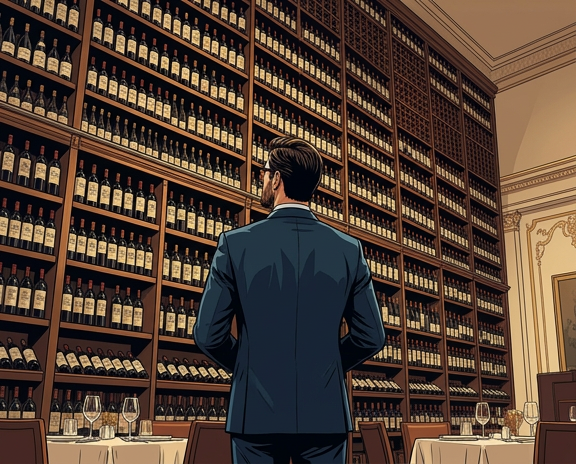

Master how to order and taste wine like a boss in any restaurant. This no-nonsense guide delivers confident, effortless wine etiquette — from choosing the right bottle to tasting with authority — without ever looking like a muppet.
You’re out for a steak, a date, or a big-deal dinner. The wine list lands on the table like a leather-bound encyclopedia. Most blokes either panic-order the second-cheapest bottle or fake their way through a tasting ritual that screams “I watched too many YouTube somm videos.”
Here’s the no-BS playbook to look quietly authoritative, impress your companions, and actually enjoy the wine—zero wankery required.
Step 1: Know What You Actually Want (Before You Open the List)

Don’t wing it when the sommelier appears. Have a loose brief ready:
- By the glass or bottle? Glasses for variety or low-commitment nights. Bottles when you’re sharing and want consistency.
- Budget anchor. Casually drop “We’re thinking around £40–60” or whatever your number is. It saves awkwardness and shows you’re decisive.
- Food match. “We’re having the rib-eye and the seabass—something that handles both red meat and fish.” Or simply “Medium-bodied red, not too tannic.”
- Style cues. “Something juicy and unoaked,” “Old World, earthy,” or “New World fruit bomb” tells the pro exactly where to steer without you pretending to know every cru.
Pro move: If you have zero idea, own it. “I usually drink Cabernet but I’m open to something better with this food—what would you suggest?” Confidence is knowing when to delegate.
Step 2: The Ordering Ritual (Keep It Short and Sharp)

Hand the list back after you’ve chosen. Now, with eye contact and a clear voice make your order:
“I’ll take the 2019 Chianti Classico Riserva, please.”
That’s it. No monologues about the producer’s grandmother’s vineyard or how this pairs with your astrological sign.
If they bring a different vintage or something off-list, roll with it or politely correct: “We were after the ’19—any chance you still have that?”
Screw Caps vs Corks: Modern Reality Check
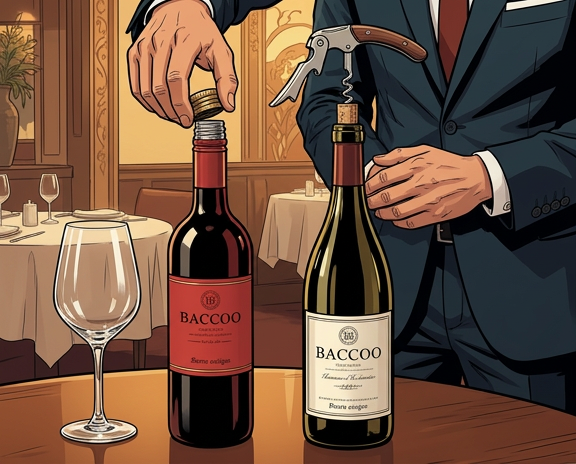
Don’t bat an eyelid if the bottle arrives with a screw cap—especially whites, rosés, or many New World reds. Screw caps are a smart, reliable closure used by top producers. They virtually eliminate cork taint (that musty, wet-cardboard fault) and keep the wine fresher and more consistent.
In practice:
- Cork: Server presents the bottle, opens it with a corkscrew, and may show you the cork. Quick glance to confirm it’s not crumbled or soaked through is enough.
- Screw cap: They’ll just twist it off. No cork to inspect. Some restaurants still pour a taste anyway—that’s normal. The ritual doesn’t change.
Taste the wine the same way regardless. Screw caps can sometimes show “reduction” (struck-match or metallic notes from low oxygen), which often blows off with a bit of air or swirling. Cork taint, on the other hand, doesn’t improve—send it back if it smells like a damp basement.
Bottom line: Judge the wine, not the closure. Acting sniffy about a screw cap is the fastest way to look dated.
Step 3: The Cork and Pour (Act Like You’ve Done This Before)

The server will now present the bottle. All you need to do here is quickly glance at the label to confirm it’s in fact what you ordered. If it is, simply nod and the selection process is done.
The waiter will open the bottle and they’ll usually pour you a thimble to taste. This is your moment—keep it under 15 seconds total.
Step 4: The Actual Tasting Sequence (Authoritative, Not Theatrical)

Do this smoothly, like checking fuel in your car—not performing for an Oscar. Here’s the steps:
- Look – Tilt the glass slightly against a white tablecloth or napkin. You’re checking colour and clarity. No need to stare like it’s the Mona Lisa.
- Swirl – Small, controlled circle on the table (easier) or in the air if you’re standing. One or two rotations. You’re releasing aroma, not mixing paint.
- Sniff – Nose in the glass, quick inhale. A second deeper one if needed. You’re looking for obvious faults (corked = wet cardboard/musty basement) or just getting a vibe (dark fruit, leather, herbs).
- Sip – Small mouthful. Let it sit on your tongue for a second, then a gentle swirl around the mouth. Swallow or spit if it’s midday and you’re driving.
- The verdict – Nod once. “That’s perfect, thanks.” Or, if it’s genuinely off: “This one tastes a bit corked to me—could we try another bottle?” Say it calmly and factually. Restaurants expect the occasional duff bottle.
Key rule: Never swish like mouthwash, slurp loudly, or start waxing lyrical unless your table is genuinely into it. A quiet “Yeah, that’s got legs” is plenty.
Step 5: Wine Language That Doesn’t Make You Sound Like a Bellend

Use useful, low-key phrases to look the part without venturing into questionable territory:
- “Big, but balanced.”
- “Nice acidity—cuts through the fat on the steak.”
- “A bit tight, maybe needs ten minutes to open up.”
- “Love the grip on this one.”
Avoid: “Expressive nose with undertones of wet slate and my childhood memories,” or anything involving “terroir” unless you actually know what you’re talking about.

Bonus Moves That Separate the Men from the Boys
- Let everyone at the table taste the first pour if it’s a shared bottle. Generosity looks strong.
- If the wine is excellent, a simple “Great choice” to the sommelier goes further than a TED Talk.
- On dates or with clients: Pour for others before yourself. Old-school, but it still lands.
- Never send a wine back because you “don’t like it.” Only send it back if it’s faulty (corked, oxidised, vinegar). Disliking the style is on you.
Final Glass: The Real Secret
The most authoritative move is not the swirl or the tasting notes. It’s treating wine as a drink, not a performance. Know enough to enjoy it, order with clarity, taste with purpose, and move on with the night.
Do that and you’ll look like the guy who knows what he’s doing—because you actually do. No cape, no cape.
Now go book that table. And order the one that makes you happy, not the one that looks impressive on the list.